3,600 views Last updated: 25/12/2025 Download PDF (2 pages)
Genre 🎹 Piano, 🎹 Christmas Piano, Hymns
As this is an audio player, the processing may cause the sound to differ from the original MP3 or MIDI file, making it sound a bit "electronic." Please treat these playback samples strictly as reference guides to assist you in practicing O Come, Little Children Piano. You can find the sheet music below; for the synchronized video and piano roll, please check the YouTube clip below or visit our YouTube channel.
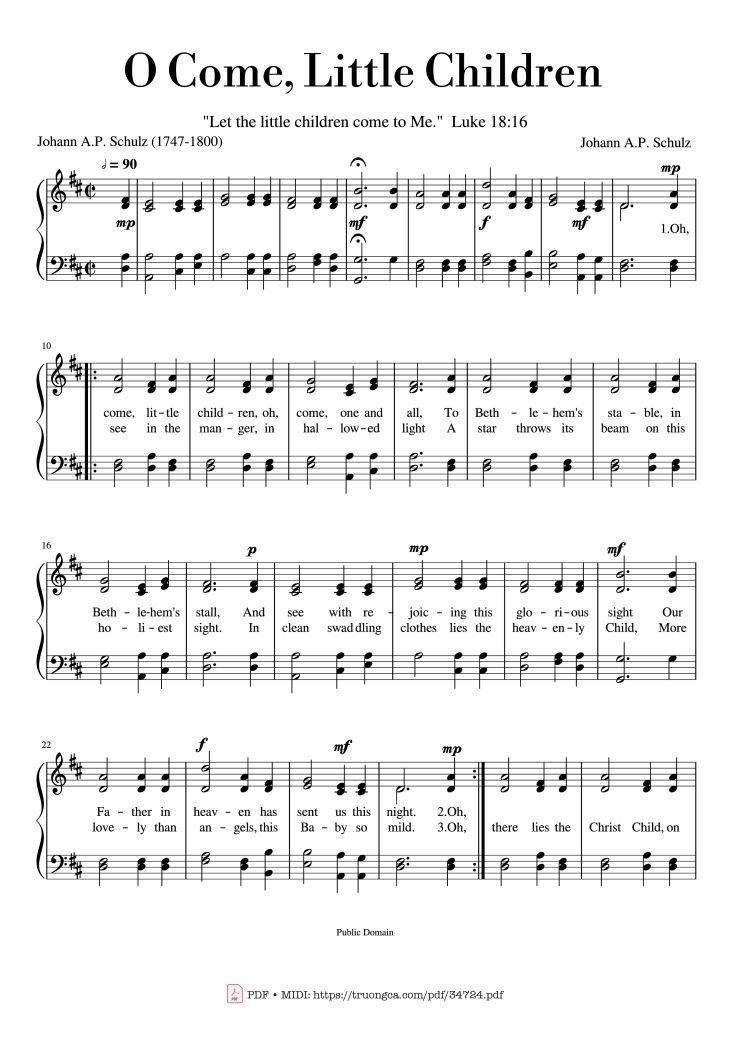
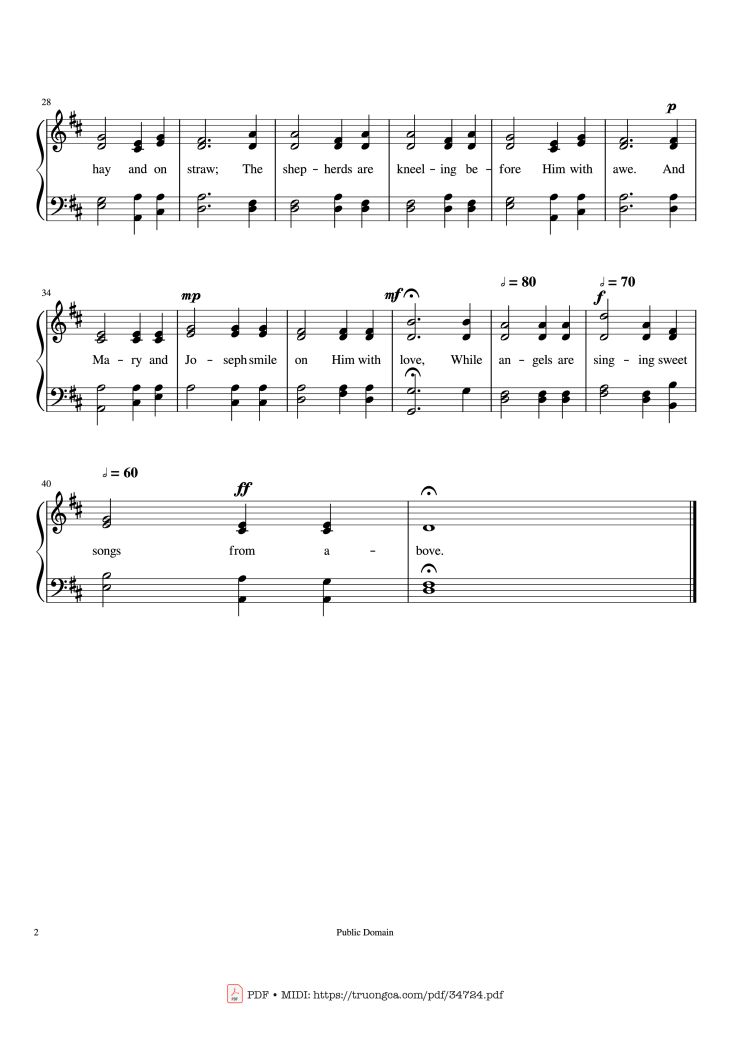
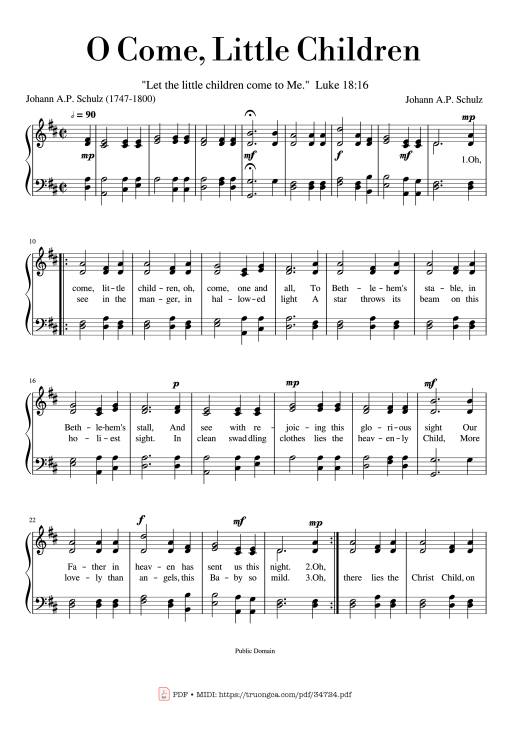
O come, little children, O come, one and all, O come to the manger in Bethlehem's stall
More similar sheet PDFs: O Come, Little Children Piano:
Sheet music Piano O Come, Little Children Piano by Johann A.P. Schulz is shared here to support your practice of Piano. The sheets with notes and MIDI & MP4 are provided for reference only and are not for commercial use. Copyright belongs to the songwriter/author and the respective copyright owners. PianoSnap.com does not own or claim any copyrighted content. You can download the high-quality PDF files with full music staff via the PDF link above.
Play O Come, Little Children Piano
The videos/audio files O Come, Little Children Piano by Johann A.P. Schulz are embedded from YouTube, MuseScore, or other third-party sources. Availability depends on the original platforms and may change due to copyright rules, policies, or advertisements. If a video or audio file cannot be played, it may have been removed by the source.
Learning O Come, Little Children Piano by Johann A.P. Schulz is a rewarding way to develop your piano skills. This Beginner-level piece comes with a 2-page score, so an effective practice routine should match both the technical demands of the music and your current playing level.
How to Practice O Come, Little Children Piano Effectively
Start with a short warm-up (5–10 minutes): Warm up your fingers with scales, five-finger patterns, or simple exercises. If the piece contains a particular technique that you find difficult, use a warm-up that prepares your hands for it.
As an 🎯 <span class='maintitle-beginner'>Beginner</span>-level piece, O Come, Little Children Piano is a good opportunity to build solid piano fundamentals. Focus on reading the notes accurately, finding comfortable fingering, keeping a steady rhythm, and coordinating both hands.
Learn one section at a time: Divide the 2-page score into short sections. Make sure each section feels comfortable before connecting it to the next one.
Keep a steady tempo: Do not worry about playing quickly. Use a slow, comfortable tempo and concentrate on playing every note clearly and evenly.
Read the music carefully: Try to look at the sheet music while playing instead of relying entirely on memory. Pay attention to note patterns, rests, dynamics, and repeated phrases.
Build confidence with complete play-throughs: Once the individual sections are comfortable, connect them and gradually work toward playing the complete piece without stopping.
Finish with a complete run-through: After focused practice, play as much of the piece as possible without stopping. This helps you connect the individual sections and discover whether a passage that works well on its own also works naturally within the complete piece.
Print and mark the sheet music: Print the score, make your own notes, and practice directly on the printed sheet. Writing and marking the music can help you remember difficult passages more easily.
Practice Tips for O Come, Little Children Piano
Consistent practice is more useful than simply spending a long time at the piano.
Set a specific goal for each session, such as improving one difficult transition, increasing the tempo of a short passage, or making the melody more expressive.
As you become more comfortable with the piece, gradually move from technical practice toward a complete and musical performance.