5,000 views Last updated: 25/12/2025 Download PDF (1 pages)
Genre 🎹 Piano
More similar sheet PDFs: Cùng Bước:
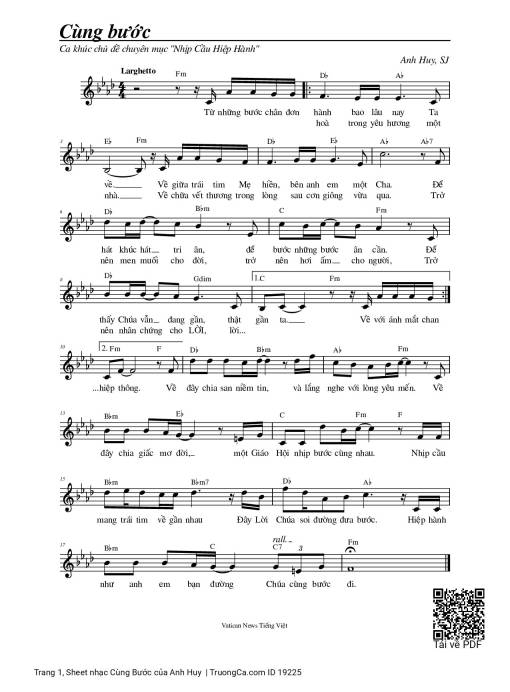
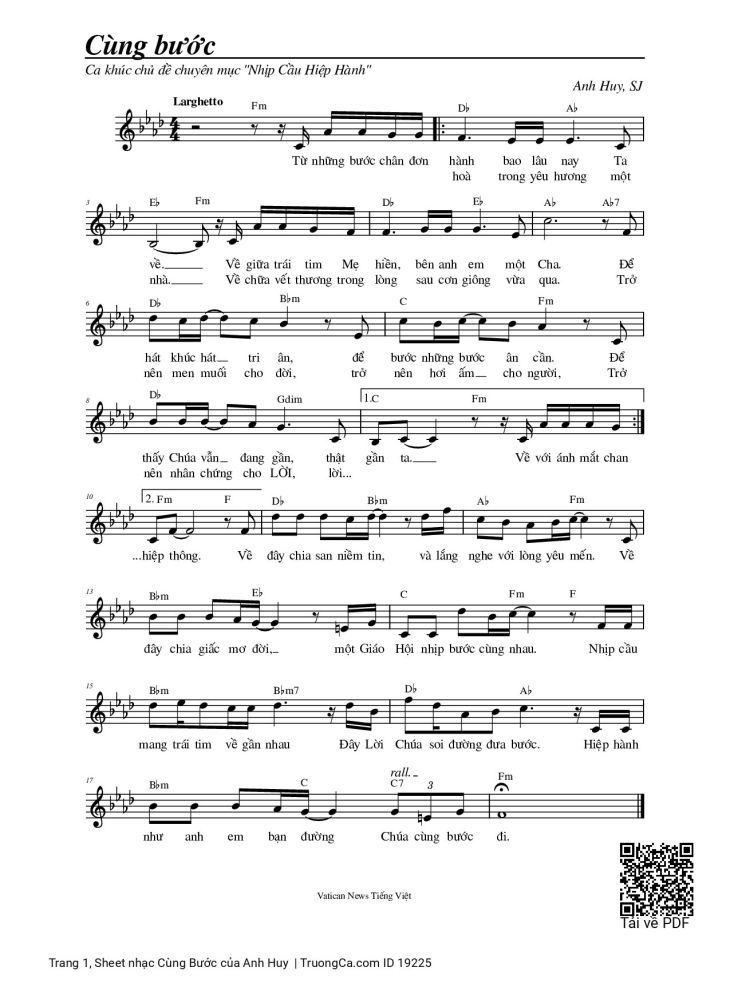
Sheet music Cùng Bước by Anh Huy is shared here to help you practice singing effectively. The sheets with notes and MIDI & MP4 are provided for reference only and for non-commercial use. They may not be used for buying, selling, or any commercial activity. Copyright belongs to the songwriter/author and the respective copyright owners. PianoSnap.com does not own or claim any copyrighted content. You can download the high-quality PDF files with full music staff via the PDF link above.
Play Cùng Bước
The videos/audio files Cùng Bước by Anh Huy are embedded from YouTube, MuseScore, or other third-party sources. These videos are subject to third-party copyright control and may be removed in accordance with YouTube’s copyright rules or the policies of the respective platforms, and may include advertisements. If you are unable to access these songs, it means they may have been removed by the original source.
Lyrics & Chords Cùng Bước
Anh Huy
Từ những bước chân đơn hành bao lâu nay Ta về.
Về giữa trái tim Mẹ hiền, bên anh em một Cha.
Để hát khúc hát tri ân,
để bước những bước ân cần.
Để thấy Chúa vẫn đang gần,
thật gần ta.
Về với ánh mắt chan hoà trong yêu hương một nhà.
Về chữa vết thương trong lòng sau cơn giông vừa qua.
Trở nên men muối cho đời, trở nên hơi ấm cho người,
Trở nên nhân chứng cho lờ, lời hiệp thông.
ĐK: Về đây chia san niềm tin, và lắng nghe với lòng yêu mến.
Về đây chia giấc mơ đời, một Giáo Hội nhịp bước cùng nhau.
Nhịp cầu mang trái tim về gần nhau
Đây Lời Chúa soi đường đưa bước.
Hiệp hành như anh em bạn đường
Chúa cùng bước đi.
Hiệp hành như anh em bạn đường
Chúa cùng bước đi.
Learning Cùng Bước by Anh Huy is a rewarding way to develop your piano skills. This -level piece comes with a 1-page score, so an effective practice routine should match both the technical demands of the music and your current playing level.
How to Practice Cùng Bước Effectively
Start with a short warm-up (5–10 minutes): Warm up your fingers with scales, five-finger patterns, or simple exercises. If the piece contains a particular technique that you find difficult, use a warm-up that prepares your hands for it.
As an -level piece, Cùng Bước benefits from a highly focused practice approach. Instead of spending most of your time on complete run-throughs, identify the technical and musical problems that limit your performance and work on them individually.
Map the difficult sections: Study the 1-page score before practicing. Identify fast passages, large jumps, repeated chords, awkward fingering, complex rhythms, hand crossings, and sections that require particular control or endurance.
Use slow practice to solve problems: Practice demanding passages significantly below performance tempo. Concentrate on relaxed movement, accurate fingering, even rhythm, and clean coordination. Increase the tempo only when the passage remains secure.
Work in very small sections: For technically demanding passages, reduce your practice area to only a few notes or measures. Repeat the movement until it becomes consistent, then gradually expand the section.
Practice hands separately and in combinations: Difficult passages may benefit from right-hand, left-hand, and hands-together practice. You can also practice short transitions separately to solve coordination problems without repeatedly playing the entire passage.
Develop speed gradually: Do not treat the final tempo as the starting point. Increase the metronome in small steps and occasionally return to a slower tempo to check that tension and inaccuracies have not developed.
Refine musical interpretation: Once the technical demands are under control, work on voicing, balance, phrasing, articulation, dynamics, pedaling, and the overall direction of the music. At an advanced level, technical accuracy is only part of the final performance.
Finish with a complete run-through: After focused practice, play as much of the piece as possible without stopping. This helps you connect the individual sections and discover whether a passage that works well on its own also works naturally within the complete piece.
Print and mark the sheet music: Print the score, make your own notes, and practice directly on the printed sheet. Writing and marking the music can help you remember difficult passages more easily.
Practice Tips for Cùng Bước
Consistent practice is more useful than simply spending a long time at the piano.
Set a specific goal for each session, such as improving one difficult transition, increasing the tempo of a short passage, or making the melody more expressive.
As you become more comfortable with the piece, gradually move from technical practice toward a complete and musical performance.