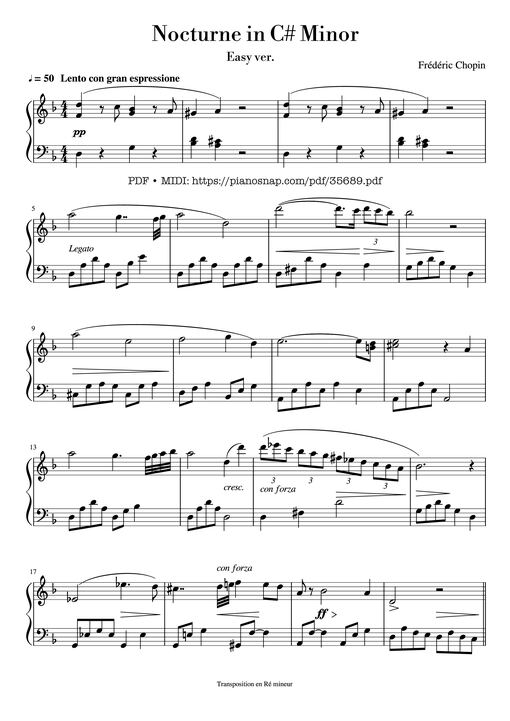
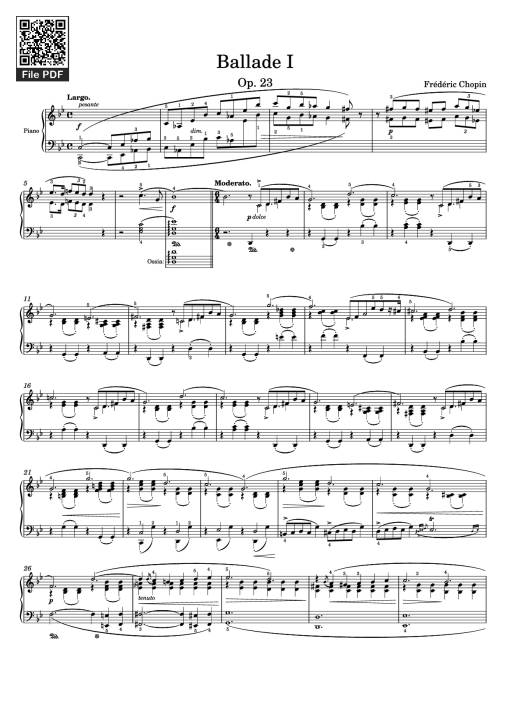
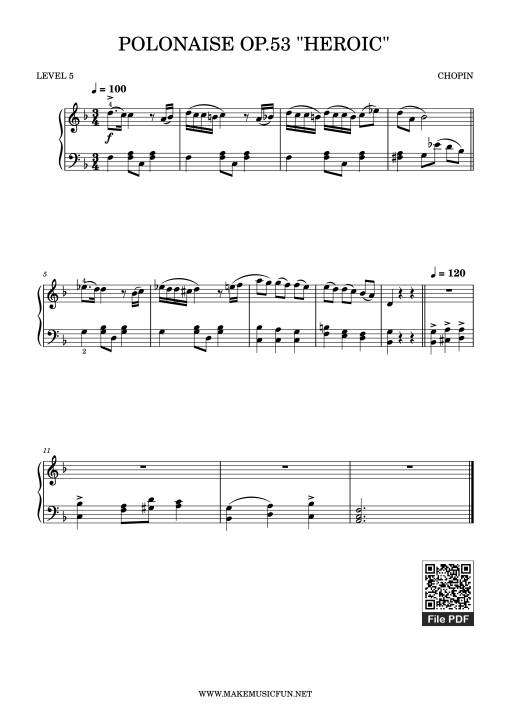
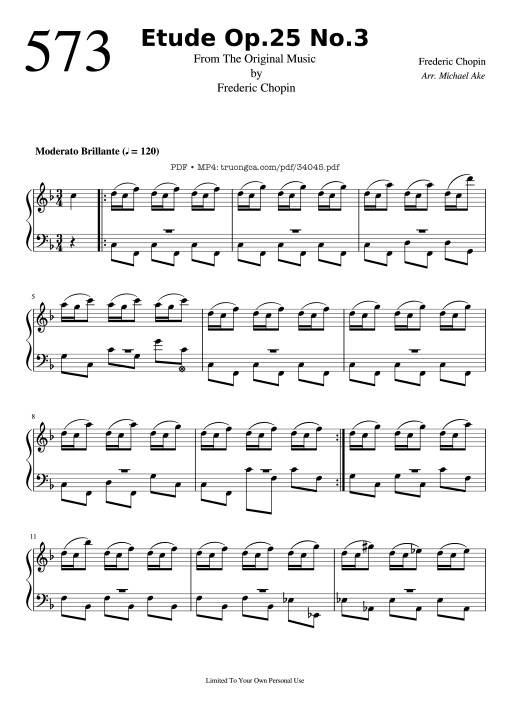
405,800 views Last updated: 08/03/2026 Download PDF (3 pages)
Genre 🎹 Piano, 🎹 Classical Piano
As this is an audio player, the processing may cause the sound to differ from the original MP3 or MIDI file, making it sound a bit "electronic." Please treat these playback samples strictly as reference guides to assist you in practicing Nocturne in E-flat Major (Easy). You can find the sheet music below; for the synchronized video and piano roll, please check the YouTube clip below or visit our YouTube channel.
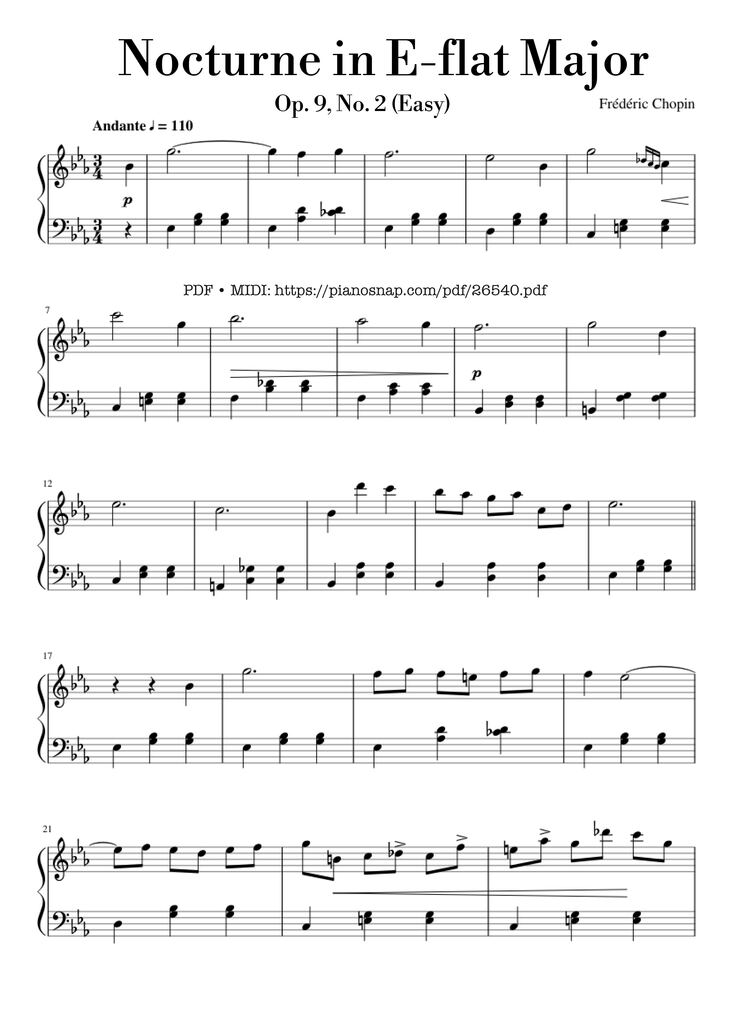
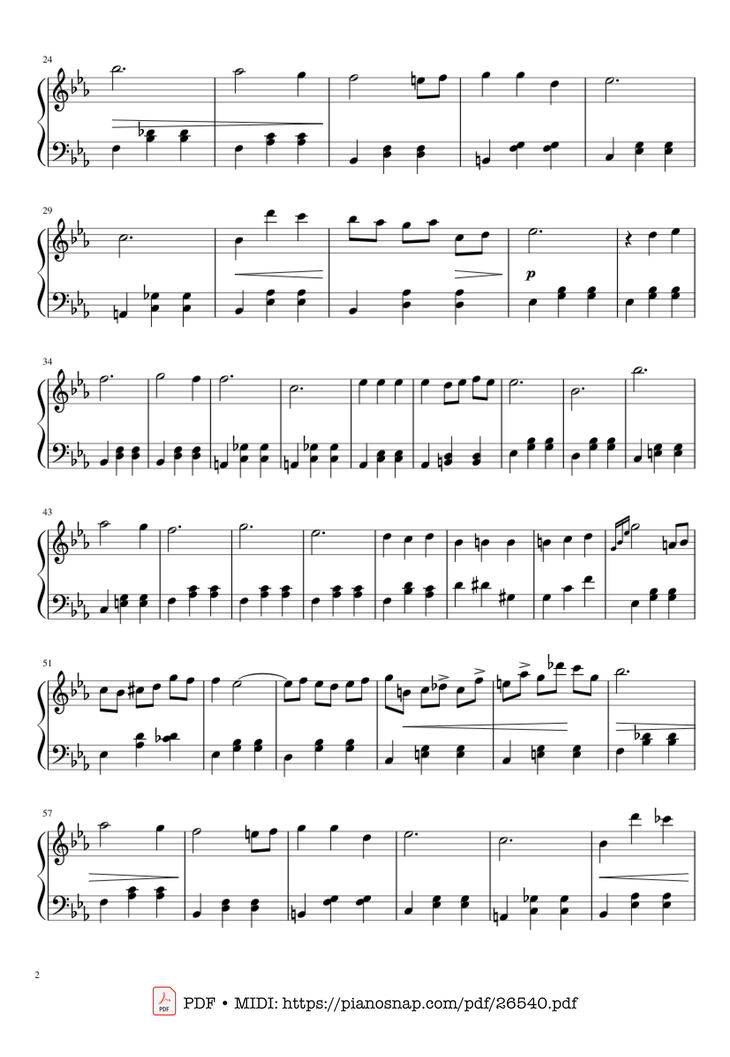
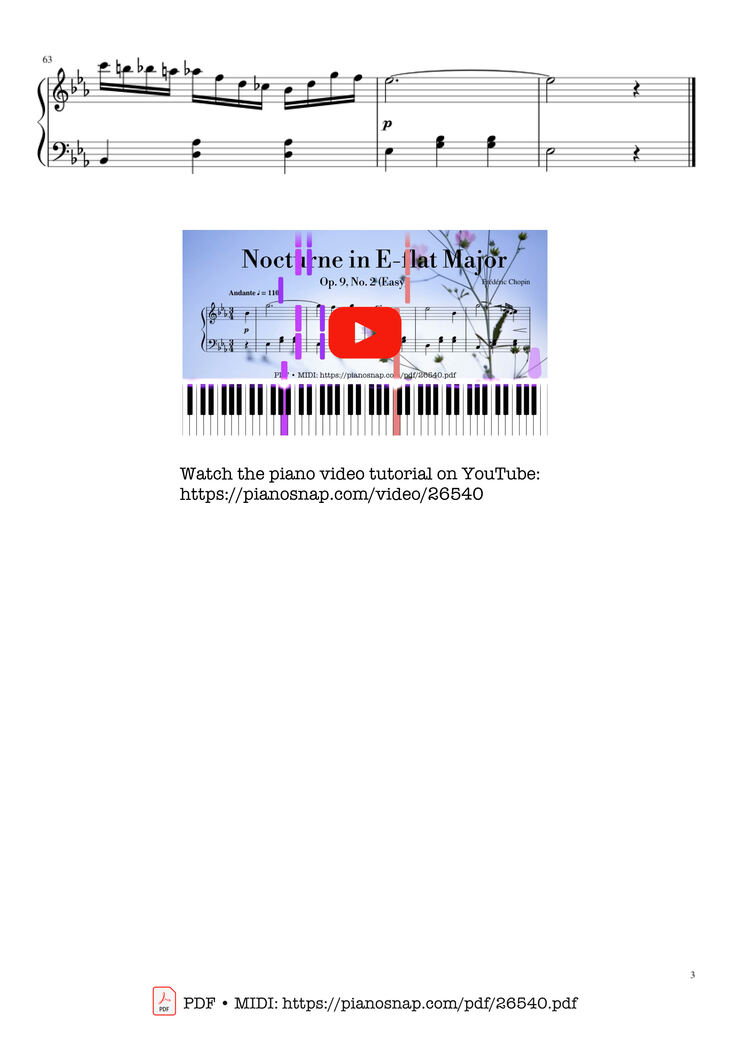
More similar sheet PDFs: Nocturne in E-flat Major (Easy):
Sheet music Nocturne in E-flat Major (Easy) by Frédéric Chopin is shared here to help you practice singing effectively. The sheets with notes and MIDI & MP4 are provided for reference only and for non-commercial use. They may not be used for buying, selling, or any commercial activity. Copyright belongs to the songwriter/author and the respective copyright owners. PianoSnap.com does not own or claim any copyrighted content. You can download the high-quality PDF files with full music staff via the PDF link above.
Play Nocturne in E-flat Major (Easy)
The videos/audio files Nocturne in E-flat Major (Easy) by Frédéric Chopin are embedded from YouTube, MuseScore, or other third-party sources. These videos are subject to third-party copyright control and may be removed in accordance with YouTube’s copyright rules or the policies of the respective platforms, and may include advertisements. If you are unable to access these songs, it means they may have been removed by the original source.
Story & Comments Nocturne in E-flat Major (Easy)
Technical Practice Summary
* Right Hand (Melodic Flow): Focus on the Cantabile (singing) style. Your goal is to achieve total fluidity in the decorative runs and ensure the melody feels like a continuous breath rather than individual strikes.
* Left Hand (Structural Anchor): Focus on the Large Jumps and wide intervals. Your goal is to master the accuracy of the "Bass-Chord-Chord" movement to provide a rock-solid rhythmic foundation for the melody to float over.
* Dynamics (Expressive Nuance): Focus on Graduation of Touch. Your goal is to execute seamless transitions between piano and forte, ensuring that your crescendos feel organic and never harsh.
* Texture (Voicing): Focus on Polyphonic Balance. Your goal is to keep the melodic line distinct and prominent, preventing the accompaniment from becoming too heavy or "muddy" through over-pedaling.
The Story & Comments section—except for a few serious or formal entries—is mainly for entertainment, like casual stories shared over a cup of tea. We kindly ask that you do not take the authenticity too seriously.
Lyrics & Chords Nocturne in E-flat Major (Easy)
Frédéric Chopin
Frédéric Chopin
Download and print in PDF or MIDI free sheet music for Nocturne in E-flat Major
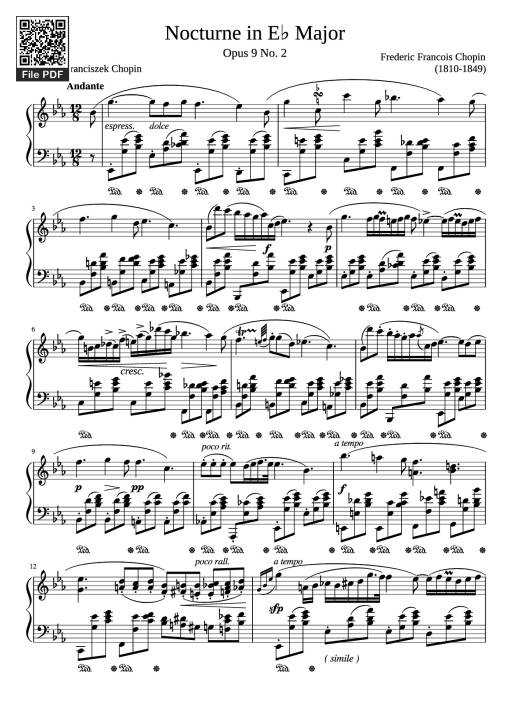
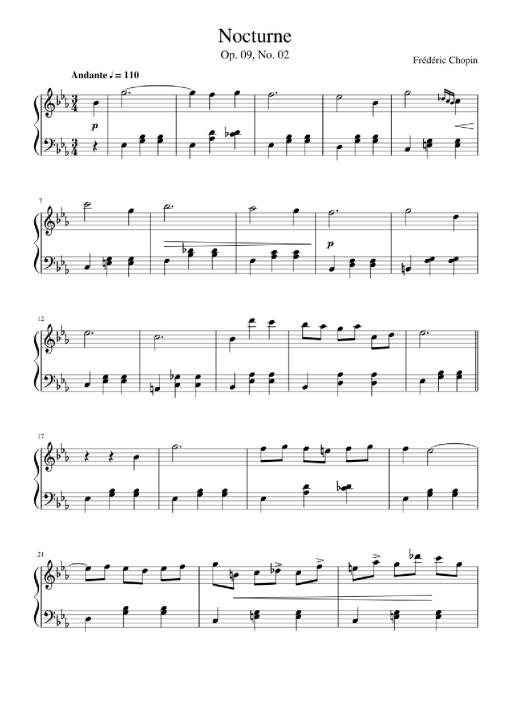
Nocturne in E-flat Major, Op. 9, No. 2
Learning Nocturne in E-flat Major (Easy) by Frédéric Chopin is a rewarding way to develop your piano skills. This Beginner-level piece comes with a 3-page score, so an effective practice routine should match both the technical demands of the music and your current playing level.
How to Practice Nocturne in E-flat Major (Easy) Effectively
Start with a short warm-up (5–10 minutes): Warm up your fingers with scales, five-finger patterns, or simple exercises. If the piece contains a particular technique that you find difficult, use a warm-up that prepares your hands for it.
As an 🎯 <span class='maintitle-beginner'>Beginner</span>-level piece, Nocturne in E-flat Major (Easy) is a good opportunity to build solid piano fundamentals. Focus on reading the notes accurately, finding comfortable fingering, keeping a steady rhythm, and coordinating both hands.
Learn one section at a time: Divide the 3-page score into short sections. Make sure each section feels comfortable before connecting it to the next one.
Keep a steady tempo: Do not worry about playing quickly. Use a slow, comfortable tempo and concentrate on playing every note clearly and evenly.
Read the music carefully: Try to look at the sheet music while playing instead of relying entirely on memory. Pay attention to note patterns, rests, dynamics, and repeated phrases.
Build confidence with complete play-throughs: Once the individual sections are comfortable, connect them and gradually work toward playing the complete piece without stopping.
Finish with a complete run-through: After focused practice, play as much of the piece as possible without stopping. This helps you connect the individual sections and discover whether a passage that works well on its own also works naturally within the complete piece.
Print and mark the sheet music: Print the score, make your own notes, and practice directly on the printed sheet. Writing and marking the music can help you remember difficult passages more easily.
Practice Tips for Nocturne in E-flat Major (Easy)
Consistent practice is more useful than simply spending a long time at the piano.
Set a specific goal for each session, such as improving one difficult transition, increasing the tempo of a short passage, or making the melody more expressive.
As you become more comfortable with the piece, gradually move from technical practice toward a complete and musical performance.