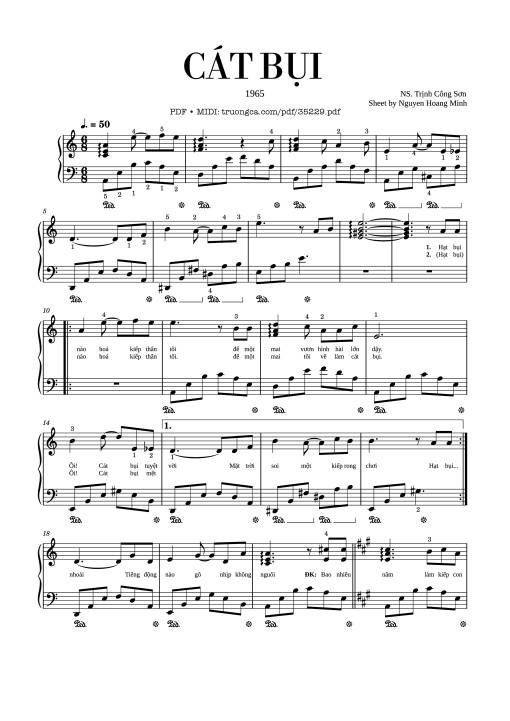
3,200 views Last updated: 19/03/2026 Download PDF (3 pages)
Genre 🎹 Piano
As this is an audio player, the processing may cause the sound to differ from the original MP3 or MIDI file, making it sound a bit "electronic." Please treat these playback samples strictly as reference guides to assist you in practicing Cát bụi Piano. You can find the sheet music below; for the synchronized video and piano roll, please check the YouTube clip below or visit our YouTube channel.
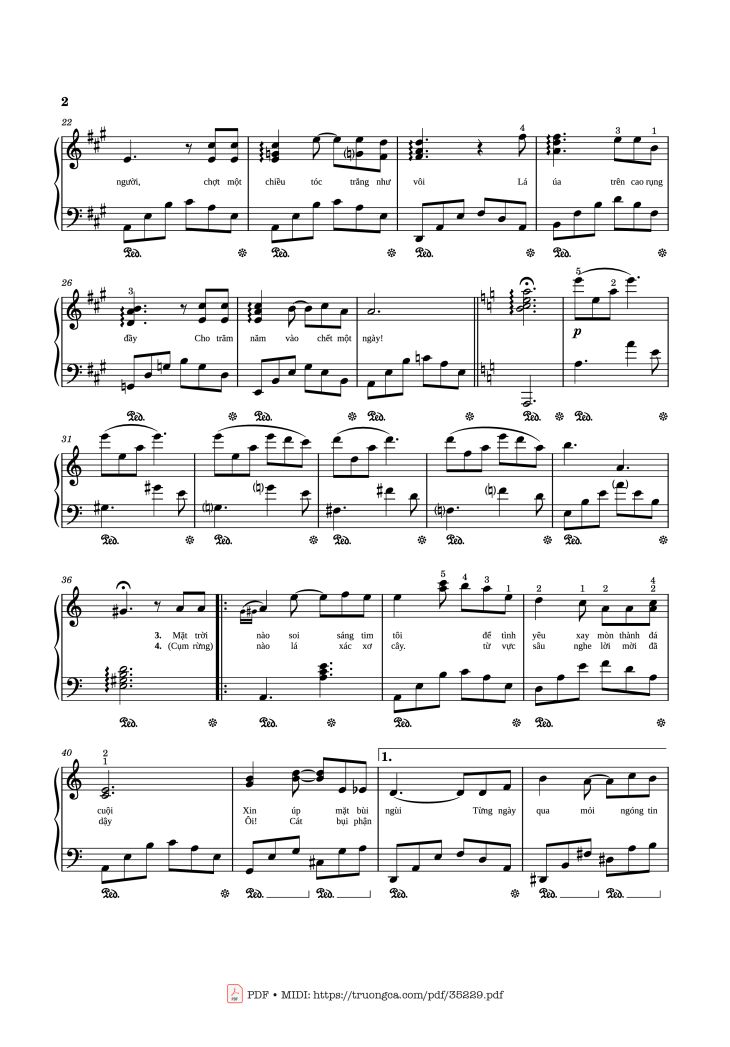
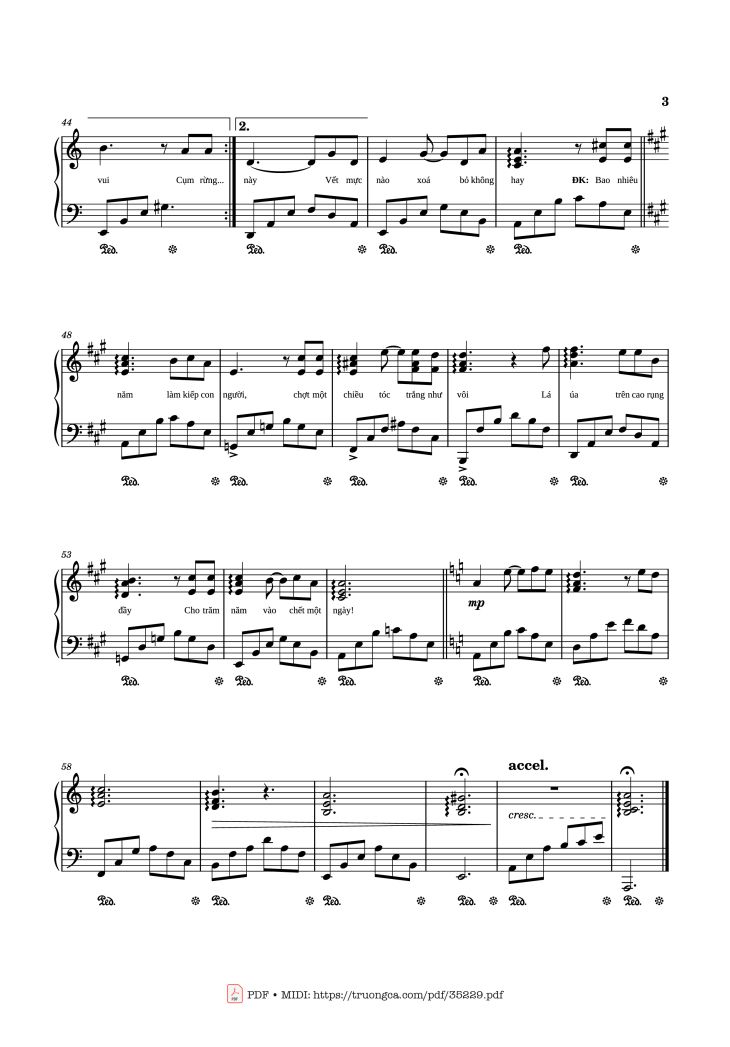
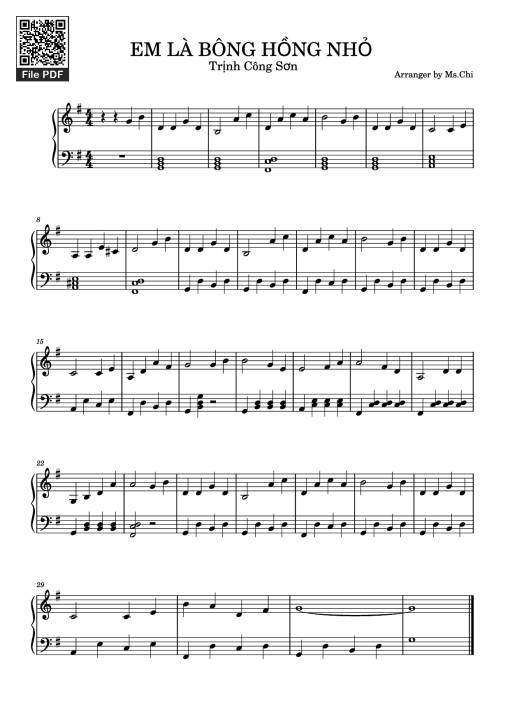
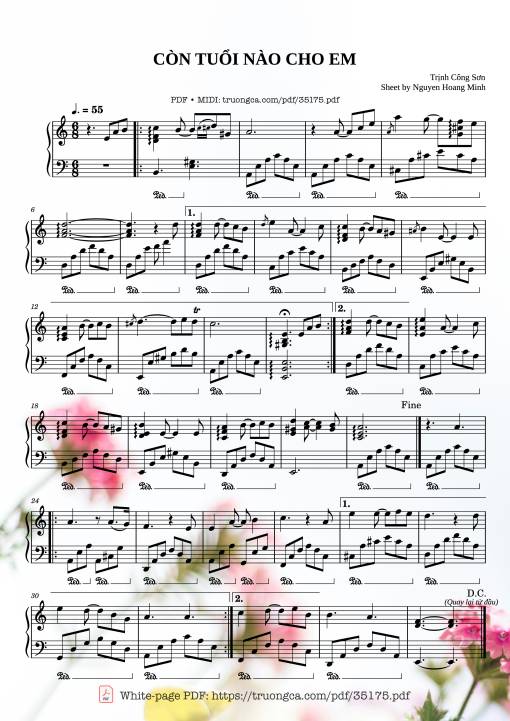
More similar sheet PDFs: Cát bụi Piano:
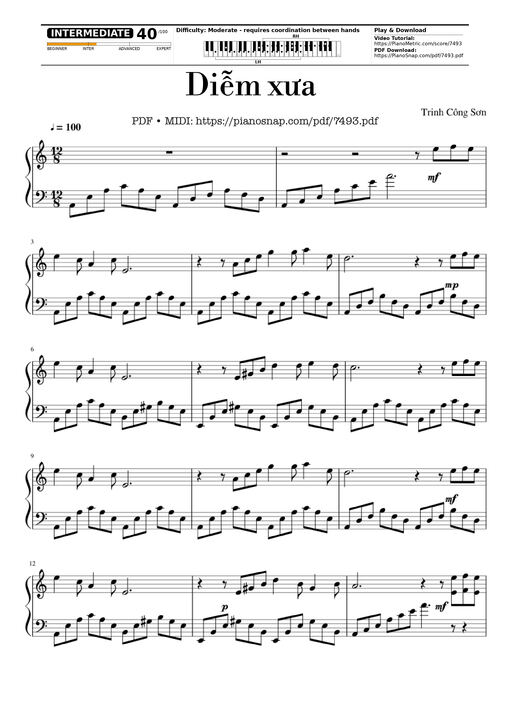
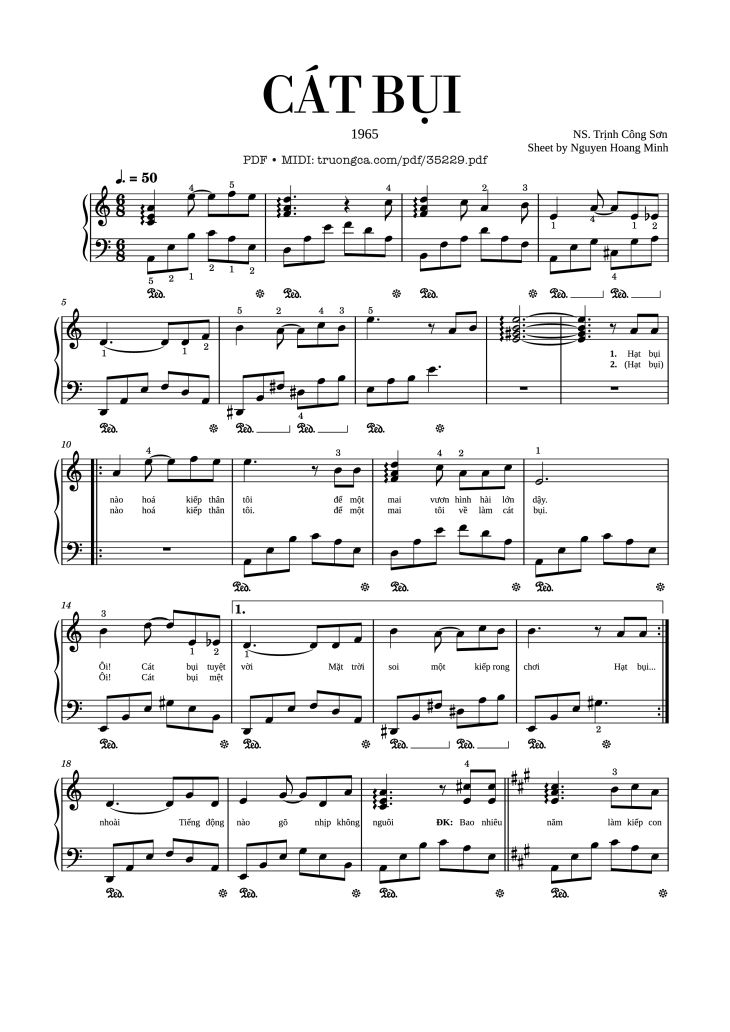
Sheet music Piano Cát bụi Piano by Trịnh Công Sơn is shared here to support your practice of Piano. The sheets with notes and MIDI & MP4 are provided for reference only and are not for commercial use. Copyright belongs to the songwriter/author and the respective copyright owners. PianoSnap.com does not own or claim any copyrighted content. You can download the high-quality PDF files with full music staff via the PDF link above.
Play Cát bụi Piano
The videos/audio files Cát bụi Piano by Trịnh Công Sơn are embedded from YouTube, MuseScore, or other third-party sources. Availability depends on the original platforms and may change due to copyright rules, policies, or advertisements. If a video or audio file cannot be played, it may have been removed by the source.
Story & Comments Cát bụi Piano
Trong bài Cát Bụi, nhạc sĩ họ Trịnh có một câu hát nghe qua tưởng nhẹ như khói, nhiều người có lẽ để trôi theo giai điệu mà chưa kịp dừng lại suy ngẫm: “Ôi cát bụi phận này/ Vết mực nào xóa bỏ không haỵ”.
Bà Đặng Tuyết Mai (vợ ông Nguyễn Cao Kỳ), trong một dịp gặp gỡ giới văn nghệ, đã được chính TCS chậm rãi giải thích về câu hát ấy - một hình ảnh vừa giản dị, vừa buồn bã đến nao lòng. Ông kể về sự khai sinh và khai tử, như được ghi lại trong bài hát “Cát bụi”, nơi những làng xã xa xôi của miền quê Việt Nam: “Khi một đứa bé được sinh ra thì bố mẹ đứa trẻ báo cho làng xã biết.
Người ta ghi tên đứa bé vào một cuốn sổ bằng viết mực…, thế rồi khi đứa bé lớn lên sau lũy tre xanh, trưởng thành, già… nếu chết đi thì người nhà cũng báo cho làng xã biết; người ta cũng lấy cái bút gạch tên người chết trong cuốn sổ đinh này là xong một đời người”.
Một đời người, rốt cuộc, chỉ gói gọn trong vài nét mực - lúc được viết vào, khi bị gạch bỏ. Bởi vậy, khi cuộc đời khép lại, câu hát “Vết mực nào xóa bỏ không hay” hiện lên không còn là lời than mơ hồ, mà là một sự thật lặng lẽ, lạnh mà thấm sâu. Không mông lung, không huyền hoặc - chỉ là cát bụi trở về với cát bụi.
The Story & Comments section—except for a few serious or formal entries—is mainly for entertainment, like casual stories shared over a cup of tea. We kindly ask that you do not take the authenticity too seriously.
Learning Cát bụi Piano by Trịnh Công Sơn is a rewarding way to develop your piano skills. This Intermediate-level piece comes with a 3-page score, so an effective practice routine should match both the technical demands of the music and your current playing level.
How to Practice Cát bụi Piano Effectively
Start with a short warm-up (5–10 minutes): Warm up your fingers with scales, five-finger patterns, or simple exercises. If the piece contains a particular technique that you find difficult, use a warm-up that prepares your hands for it.
As an Intermediate-level piece, Cát bụi Piano requires more than simply learning the correct notes. Your practice should combine accuracy, coordination, rhythmic control, and musical expression.
Divide the score into focused sections: The 3-page score is easier to manage when you practice a few measures at a time. Mark transitions, repeated patterns, chord changes, and passages that consistently cause mistakes.
Practice difficult passages separately: When a section feels uncomfortable, stop playing the entire piece and isolate that passage. Practice the transition into the difficult section as well as the difficult notes themselves.
Use a metronome strategically: Start difficult passages slowly and increase the tempo gradually. If accuracy decreases when you speed up, return to the previous tempo instead of forcing the passage at full speed.
Practice hands separately when needed: Work on complicated rhythms, fingering, jumps, or chord patterns with each hand separately before putting them together. Then practice both hands at a slower tempo until the coordination becomes reliable.
Add musical expression: After the notes are secure, focus on dynamics, articulation, phrasing, balance between the hands, and the overall shape of each musical phrase.
Finish with a complete run-through: After focused practice, play as much of the piece as possible without stopping. This helps you connect the individual sections and discover whether a passage that works well on its own also works naturally within the complete piece.
Print and mark the sheet music: Print the score, make your own notes, and practice directly on the printed sheet. Writing and marking the music can help you remember difficult passages more easily.
Practice Tips for Cát bụi Piano
Consistent practice is more useful than simply spending a long time at the piano.
Set a specific goal for each session, such as improving one difficult transition, increasing the tempo of a short passage, or making the melody more expressive.
As you become more comfortable with the piece, gradually move from technical practice toward a complete and musical performance.